 Trump Signal Index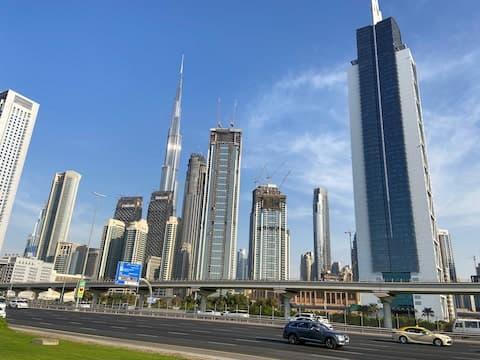
Trump posted on August 19 that he is launching “the most powerful economic operation” against Iran — describing it as “unprecedented economic warfare and isolation.” He warned that any nation allowing Iran access to financial institutions, businesses, airports, or government agencies would pay “an enormous economic price.”
He listed the specific mechanisms to shut down: oil smuggling, cash transfers, ship registrations, and shell company networks. “All of this must stop immediately,” he wrote. “This is Economic D-Day. Every ally must stand with the United States to isolate Iran and defeat the threat.”
No specific new policy instruments were announced. The declaration is a framework and a warning — the enforcement details are to follow.
The UAE Pivot
The declaration came one day after a more concrete development: the UAE announced on August 18 that it was cutting all trade and financial ties with Iran, citing an Iranian ballistic missile attack on UAE territory. Iran denied firing any missile.
The timing and coordination are not coincidental. The WSJ reported that the Trump administration spent weeks persuading the UAE to crack down on Iranian financial networks operating within its borders. The US pressed UAE authorities to take aggressive action against sanctioned Iranian entities and covert networks. A former US ambassador to Oman noted that Trump and UAE President Sheikh Mohammed bin Zayed likely coordinated the announcement in advance.
The significance is structural. The UAE — particularly Dubai — is what analysts call Iran’s “economic lung.”
The UAE accounted for 30.6% of Iran’s total imports in 2024 ($21 billion), making it Iran’s single largest import supplier — ahead of China. On the export side, $7 billion of Iranian goods flowed to the UAE, making it Iran’s third-largest export destination. Dubai has functioned as the re-export hub and financial conduit that connects Iran’s economy to the world despite sanctions — routing payments through shell companies, money changers, and front businesses that do not carry Iranian names in their transaction records. Carnegie Endowment analyst Andrew Leber: “The UAE has been called Iran’s lung — the gateway through which the Iranian economy has accessed the global economy.” The WSJ concluded that the success of Trump’s Iran economic campaign “will be decided in Dubai.”
The China Problem
Trump’s declaration pointedly did not name specific countries. But the data makes clear who is most relevant: approximately 80% of Iran’s oil exports in 2025 went to China, primarily to small independent refineries in Shandong province that buy discounted Iranian crude precisely because sanctions make it cheaper.
The US has already sanctioned several of these refineries. But Trump has an upcoming meeting with Xi Jinping — the timing is not specified publicly — and escalating sanctions on Chinese financial entities and crude buyers carries political risk before that engagement.
The China dimension creates a ceiling on how far the economic isolation campaign can go without becoming a direct confrontation with Beijing. The UAE closure helps because it cuts a route that does not require China to cooperate. But the oil channel — 80% of Iran’s export revenue — runs through China, and that is where the campaign’s structural limit sits.
Iran’s Counter-Narrative
Iranian Foreign Minister Abbas Araghchi dismissed the announcement. His response on August 20: “The so-called ‘Economic D-Day’ is nothing more than an attempt to distract from America’s domestic crisis of unprecedented debt and soaring interest costs.”
The reference point is concrete. On August 18 — one day before Trump’s announcement — US national debt crossed $40 trillion for the first time.
Araghchi continued: “Persisting with failed policies only leads to greater defeat and hostility from the Iranian people. America’s economic terrorism threatens the global economy and the sovereignty of nations.”
Hormuz: Slowly Recovering
A separate data point: maritime intelligence firm Windward reported that oil transit through the Hormuz Strait has been increasing since US naval protection began in May. In June, roughly 4 million barrels per day crossed. In July, 5 million.
Pre-war transit was approximately 15 million barrels per day. Current volumes are roughly one-third of that — not a complete closure, but far from normal. The recovery trajectory suggests the naval blockade is creating partial reopening conditions, though the UAE trade cut-off introduces new economic pressure that could affect Iran’s willingness to negotiate.
The UAE embargo is potentially more damaging to Iran than the naval blockade — not because of the formal announcement, but because of what Dubai actually does for Iran’s financial system. The problem is enforcement: illegal financial flows through Dubai have historically used structures that do not surface Iranian names in records, making traceability extremely difficult. The WSJ noted that cracking down aggressively would damage Dubai’s own standing as a global financial and commercial hub. Experts expect UAE to begin with cargo shipping restrictions and escalate gradually — not a full immediate cut. For markets: oil continues its slow recovery trajectory if the Hormuz channel stays partially open, but the UAE financial cut-off adds economic pressure that increases Iranian incentive to negotiate — or to escalate. Gold benefits from sustained uncertainty. The China angle is the biggest unknown: if Trump opts to pressure Chinese buyers as part of this campaign, the trade dynamics become significantly more complex before the Xi meeting.
Trump’s Declaration
‘Economic D-Day’ — unprecedented economic warfare against Iran, Aug 19
UAE Action
Full trade and financial embargo announced Aug 18
UAE Share of Iran Imports
30.6% ($21B in 2024) — Iran’s #1 import supplier
Iran Oil to China
~80% of Iranian crude exports (2025)
Hormuz Transit
5M bpd in July (vs 15M pre-war) — partial recovery
US National Debt
Crossed $40 trillion for first time, Aug 18