Live
◆ Trump Signal Index: 70 · High Impact ◆ Google Maps faces backlash for complying with Trump’s Lake America demand ◆ Google Maps changes Lake Ontario to Lake America after Trump’s executive order ◆ Trump says NBC's Welker will be reported to the FCC ◆ Trump EPA is accused of manipulating safety data for a highly toxic flame retardant ◆ Trump’s ambassador to Italy flaunts wealth, sparking division among Italians ◆ Trump administration’s plan to take over U.S. oil assets draws pushback from Venezuela ◆ Trump, dubbed the renamer‑in‑chief, seeks to imprint his legacy on global places ◆ Trump Signal Index: 70 · High Impact ◆ Google Maps faces backlash for complying with Trump’s Lake America demand ◆ Google Maps changes Lake Ontario to Lake America after Trump’s executive order ◆ Trump says NBC's Welker will be reported to the FCC ◆ Trump EPA is accused of manipulating safety data for a highly toxic flame retardant ◆ Trump’s ambassador to Italy flaunts wealth, sparking division among Italians ◆ Trump administration’s plan to take over U.S. oil assets draws pushback from Venezuela ◆ Trump, dubbed the renamer‑in‑chief, seeks to imprint his legacy on global places ◆ Trump Signal Index: 70 · High Impact ◆ Google Maps faces backlash for complying with Trump’s Lake America demand ◆ Google Maps changes Lake Ontario to Lake America after Trump’s executive order ◆ Trump says NBC's Welker will be reported to the FCC ◆ Trump EPA is accused of manipulating safety data for a highly toxic flame retardant ◆ Trump’s ambassador to Italy flaunts wealth, sparking division among Italians ◆ Trump administration’s plan to take over U.S. oil assets draws pushback from Venezuela ◆ Trump, dubbed the renamer‑in‑chief, seeks to imprint his legacy on global places ◆ Trump Signal Index: 70 · High Impact ◆ Google Maps faces backlash for complying with Trump’s Lake America demand ◆ Google Maps changes Lake Ontario to Lake America after Trump’s executive order ◆ Trump says NBC's Welker will be reported to the FCC ◆ Trump EPA is accused of manipulating safety data for a highly toxic flame retardant ◆ Trump’s ambassador to Italy flaunts wealth, sparking division among Italians ◆ Trump administration’s plan to take over U.S. oil assets draws pushback from Venezuela ◆ Trump, dubbed the renamer‑in‑chief, seeks to imprint his legacy on global places ◆ Trump Signal Index: 70 · High Impact ◆ Google Maps faces backlash for complying with Trump’s Lake America demand ◆ Google Maps changes Lake Ontario to Lake America after Trump’s executive order ◆ Trump says NBC's Welker will be reported to the FCC ◆ Trump EPA is accused of manipulating safety data for a highly toxic flame retardant ◆ Trump’s ambassador to Italy flaunts wealth, sparking division among Italians ◆ Trump administration’s plan to take over U.S. oil assets draws pushback from Venezuela ◆ Trump, dubbed the renamer‑in‑chief, seeks to imprint his legacy on global places ◆ Trump Signal Index: 70 · High Impact ◆ Google Maps faces backlash for complying with Trump’s Lake America demand ◆ Google Maps changes Lake Ontario to Lake America after Trump’s executive order ◆ Trump says NBC's Welker will be reported to the FCC ◆ Trump EPA is accused of manipulating safety data for a highly toxic flame retardant ◆ Trump’s ambassador to Italy flaunts wealth, sparking division among Italians ◆ Trump administration’s plan to take over U.S. oil assets draws pushback from Venezuela ◆ Trump, dubbed the renamer‑in‑chief, seeks to imprint his legacy on global places ◆ Trump Signal Index: 70 · High Impact ◆ Google Maps faces backlash for complying with Trump’s Lake America demand ◆ Google Maps changes Lake Ontario to Lake America after Trump’s executive order ◆ Trump says NBC's Welker will be reported to the FCC ◆ Trump EPA is accused of manipulating safety data for a highly toxic flame retardant ◆ Trump’s ambassador to Italy flaunts wealth, sparking division among Italians ◆ Trump administration’s plan to take over U.S. oil assets draws pushback from Venezuela ◆ Trump, dubbed the renamer‑in‑chief, seeks to imprint his legacy on global places ◆ Trump Signal Index: 70 · High Impact ◆ Google Maps faces backlash for complying with Trump’s Lake America demand ◆ Google Maps changes Lake Ontario to Lake America after Trump’s executive order ◆ Trump says NBC's Welker will be reported to the FCC ◆ Trump EPA is accused of manipulating safety data for a highly toxic flame retardant ◆ Trump’s ambassador to Italy flaunts wealth, sparking division among Italians ◆ Trump administration’s plan to take over U.S. oil assets draws pushback from Venezuela ◆ Trump, dubbed the renamer‑in‑chief, seeks to imprint his legacy on global places
Trump Signs 100% Drone Tariffs — a De Facto Ban on Chinese Drones

2026-08-14 · 4 min read

Trump Signs 100% Drone Tariffs — a De Facto Ban on Chinese Drones

US Defense Tech ↑Chinese Drones (DJI) ↓US Agriculture/Commercial ↓Geopolitical Risk ↑
Trump Signal Index70High ImpactDashboard →

Trump signed a proclamation on August 13 imposing 100% tariffs on drones and drone components classified as national security risks. A second tier of 25% applies to smaller civilian drones and non-critical parts. The White House framed it as protecting "the current and future US military operations" and domestic manufacturing jobs.

The target is China. That is not an inference — the proclamation directly references China's dominance of the global drone supply chain as the security rationale.

What Gets Taxed, and When

The 100% rate covers:

  • Drones with a maximum takeoff weight exceeding 25 kg
  • Drones equipped with thermal imaging
  • Docking stations and key structural components

Effective: September 3, 2026, 12:01 AM ET

The 25% rate covers smaller drones and non-critical components.

Effective: February 9, 2027 (180 days out)

Country-specific carve-outs: Korea, Japan, EU, Liechtenstein, Switzerland, and Taiwan pay 15%. The UK pays 10%. China gets no carve-out — it faces the full tariff rate.

Why China Is the Target

China's drone industry has no close rival. DJI alone holds an estimated 70% global share of the consumer drone market. At the category level, Chinese manufacturers control roughly 90% of consumer drones and more than 70% of commercial and enterprise drones sold globally.

For context: the US military has already banned DJI from procurement. Multiple federal agencies have placed DJI on restricted lists over data security concerns. This tariff action extends that logic to the entire commercial market.

The 100% tariff at the weight and capability thresholds chosen does not simply raise the cost of Chinese drones — it prices them out of US procurement for any government-adjacent buyer. A commercial operator buying a 30 kg survey drone from DJI would face a 100% import tax starting September 3. The practical effect, for the national-security tier, is a market closure rather than a price adjustment.

Who Benefits, Who Absorbs the Cost

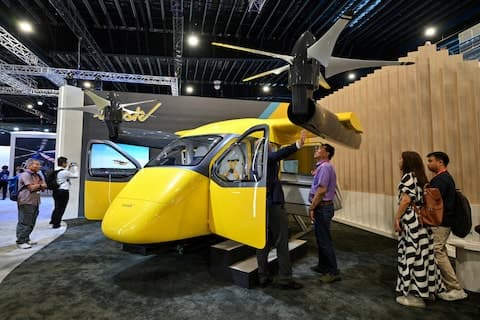
US defense tech gains directly. Domestic drone manufacturers — Skydio, Shield AI, Joby, and the expanding Pentagon-contracted supplier base — face reduced Chinese price competition for the first time at scale. The White House explicitly said the tariff "will support and create American jobs."

US agriculture and commercial operators face a near-term cost shock. Precision agriculture, construction survey, infrastructure inspection, and logistics sectors rely heavily on Chinese-made platforms because US-made alternatives either don't exist at comparable price points or don't exist at all at the required scale. A farmer running a DJI Agras T50 for crop spraying faces a 100% import cost on the next unit.

Allies benefit from the differential. Korean and Japanese drone makers — a smaller but growing set of manufacturers — get a 15% rate against China's full rate, creating a competitive opening in the US market.

The Supply Gap Problem

The obvious counter-argument is that domestic supply cannot absorb the displacement. The US has no drone manufacturer operating at Chinese volumes, and the 25-day runway to the September 3 effective date for the 100% tier leaves industrial buyers no time to qualify alternative suppliers.

The administration's implicit bet is that the tariff wall creates the demand signal that accelerates domestic buildout. The risk is that it creates a capacity gap first — particularly for agricultural and commercial uses where Chinese hardware is embedded in existing operational workflows.

The 180-day delay on the 25% consumer tier suggests the White House is aware of this: it gives smaller commercial operators more runway to adjust.

The 100% tariff effective September 3 is the most aggressive US trade action against China's drone industry to date, and it lands in a different geopolitical context than prior restrictions. US-China tensions over Taiwan, the ongoing Hormuz disruption, and the broader tech decoupling push all increase the likelihood that Beijing responds in kind — potentially targeting US aerospace exports or precision manufacturing components where China holds its own leverage. For markets: US defense-adjacent drone suppliers benefit immediately. Commercial agricultural and construction operators absorb a cost increase with no short-term domestic alternative. The broader read is that the US is treating drone technology the same way it treats semiconductors — as a strategic sector where Chinese market dominance is itself a security problem, not just a trade imbalance.

100% Tariff Effective

September 3, 2026 — 25 kg+ and thermal drones

25% Tariff Effective

February 9, 2027 — smaller civilian drones

China Consumer Drone Share

~90% globally

China Commercial Drone Share

70%+ globally

Ally Rate (Korea/Japan/EU/Taiwan)

15%

UK Rate

10%

Found this useful? Share it.

ShareThreads

Related Posts